


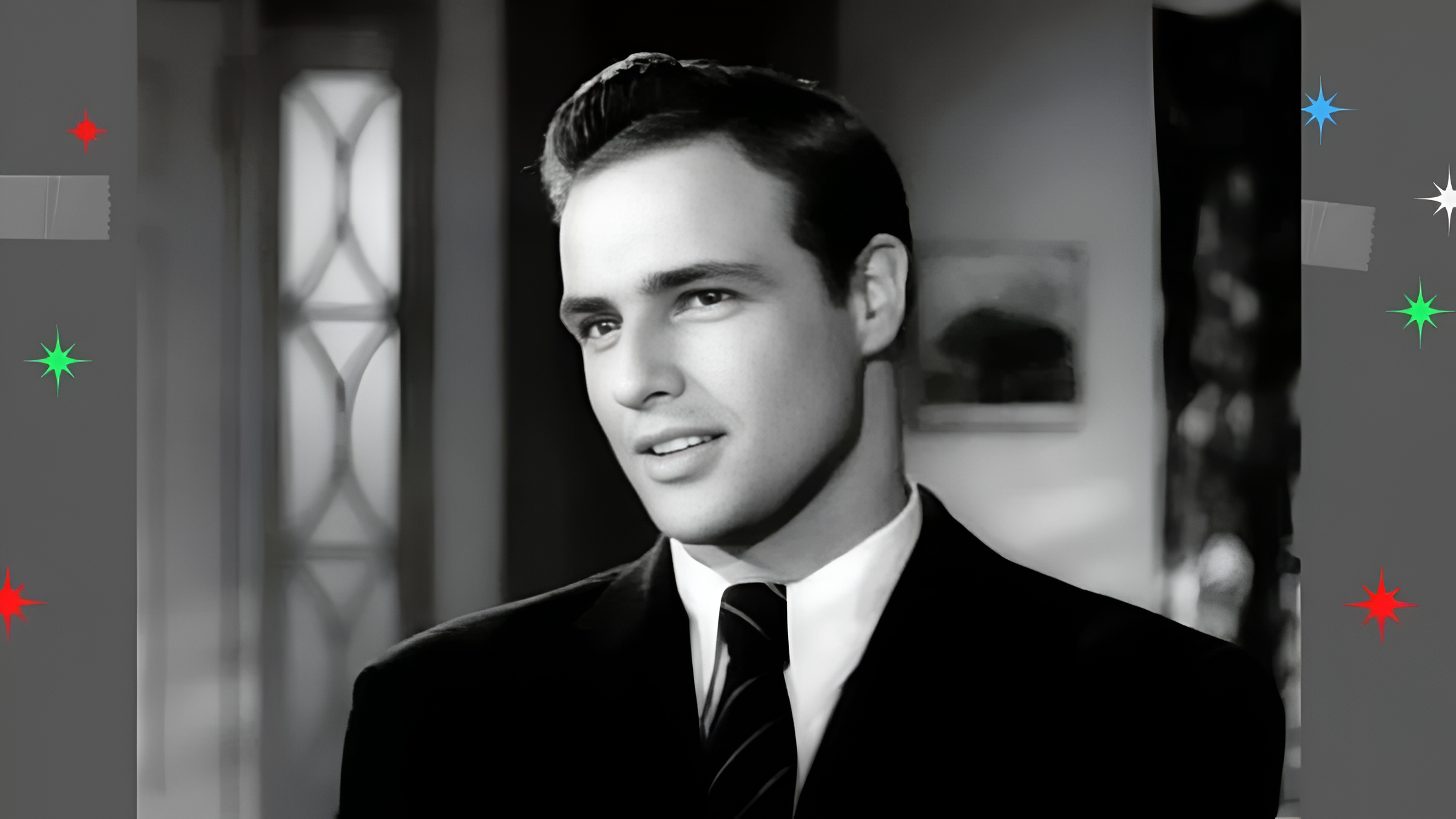
Myles Jonathan Brando: Unraveling the Tapestry of an Artistic Visionary
The name Myles Jonathan Brando evokes a unique sense of intrigue in the contemporary art world. It is a name that suggests a legacy, yet stands firmly on its own; a name synonymous with profound artistic depth, yet shrouded in a deliberate mystique. To encounter the work of Myles Jonathan Brando is to engage in a silent dialogue with an artist who masterfully blends the raw, emotional intensity of method acting with the meticulous, layered discipline of a classical painter. He is not merely an artist who creates; he is a storyteller whose canvas extends beyond pigment and film, weaving narratives that challenge our perceptions of identity, memory, and the human condition. This article is a comprehensive journey into the world of this singular creator, exploring the forces that shaped him, the philosophies that guide him, and the indelible mark he is leaving on the cultural landscape. We will dissect the myth to find the man, and in doing so, uncover the true genius of Myles Jonathan Brando.
The Formative Years and Artistic Lineage
The early life of Myles Jonathan Brando was a fascinating dichotomy of immense privilege and intense artistic expectation. Growing up within a family whose name is etched into the annals of cinematic history, he was exposed to the pinnacle of creative achievement from his earliest days. This environment was not one of mere observation, but of immersion; dinner table conversations likely revolved around character motivation, directorial vision, and the delicate alchemy of performance. However, rather than being crushed by the weight of this legacy, the young Myles Jonathan Brando used it as a foundation, absorbing the principles of transformative art while simultaneously forging a path that was distinctly his own, one that would lead him initially towards the visual arts.
His formal education was a deliberate and focused pursuit of technical mastery. He attended some of the world’s most prestigious art academies, where he dedicated himself to the rigors of draftsmanship, color theory, and art history. This period was crucial in distancing his artistic identity from his familial roots, allowing him to build a vocabulary that was purely visual. He studied the Old Masters with the same intensity he applied to modern abstract expressionists, developing a deep appreciation for the structural integrity of a composition. This academic foundation provided him with the tools to later deconstruct and reassemble visual narratives with the confidence of a true craftsman, establishing a bedrock of skill upon which his more experimental work would confidently stand.
The Philosophical Core and Creative Process
At the heart of all work by Myles Jonathan Brando is a relentless inquiry into the nature of constructed identity. His art posits that the self is not a fixed entity, but a fluid, performative construct shaped by memory, trauma, societal expectation, and the masks we wear for different audiences. This philosophical stance is deeply influenced by the method acting traditions of his lineage, translated into a visual medium. He approaches a canvas or a character not as a static subject to be depicted, but as a complex psyche to be inhabited and explored from the inside out, resulting in creations that feel unnervingly alive and psychologically resonant.
His creative process is famously meticulous and almost ritualistic, blurring the line between disciplined preparation and spontaneous eruption. He begins with extensive research and preparatory sketches, building a dense archive of visual and textual references for each project. This phase is followed by a period of intense, often chaotic, execution where intellectual understanding gives way to raw, intuitive expression. He employs a wide range of techniques—from traditional oil glazing to incorporating digital elements and found objects—allowing the medium itself to become a participant in the narrative. This marriage of control and chaos is what gives the art of Myles Jonathan Brando its unique tension and compelling depth.
A Multidisciplinary Artistic Universe
The refusal to be confined to a single medium is a defining characteristic of the Myles Jonathan Brando artistic brand. He moves with fluid authority between painting, filmmaking, and installation art, treating each not as separate disciplines but as interconnected channels for a unified artistic vision. His paintings often possess a cinematic quality, with dramatic lighting and a palpable narrative tension, as if capturing a single, pivotal frame from an unseen film. Conversely, his filmic work is deeply painterly, with every shot composed with an artist’s eye for color, texture, and symbolic detail, creating a cohesive universe where each form of expression enriches the others.
This cross-pollination of mediums allows him to explore his core themes with unprecedented richness. A concept first explored in a series of haunting self-portraits might later re-emerge as the central motif in a short film, or be physically reconstructed as an immersive installation. This holistic approach demands active participation from the audience, inviting them to piece together the overarching narrative from these multifaceted fragments. The work of Myles Jonathan Brando is therefore not a collection of isolated pieces, but a sprawling, interconnected meta-narrative, a Gesamtkunstwerk, or total work of art, for the modern age.
Major Works and Critical Interpretations
One of his most acclaimed series, “The Marlon Tapes,” serves as a perfect entry point into the complex world of Myles Jonathan Brando. This cycle of large-scale mixed-media paintings incorporates audio elements, transcribed text, and abstract visual representations that grapple with the immense legacy of his forebear. Rather than a simple homage, the series is a courageous deconstruction, a working-through of the psychological inheritance of genius. It examines the dichotomy between the iconic public figure and the private man, a theme that resonates deeply with his own navigation of public perception and has been interpreted by critics as a profound meditation on filial influence and artistic individuation.
Another pivotal work, the installation “Echo Chamber,” solidified his reputation as a visionary of immersive art. This multi-room environment used mirrored surfaces, projected video, and a disorienting soundscape to physically manifest the experience of a fractured, hyper-self-aware consciousness. Visitors were not just viewers but participants, their own reflections becoming part of the artwork, forcing a confrontation with their own performative identities. The critical reception to such works has been overwhelmingly laudatory, with commentators praising the artist Myles Jonathan Brando for his ability to translate complex, internal psychological states into powerful, sensorially overwhelming external experiences that challenge the very boundaries of artistic consumption.
The Deliberate Strategy of Public Mystique
In an era of relentless self-promotion and curated social media personas, Myles Jonathan Brando maintains a striking and deliberate elusiveness. He grants few interviews, maintains a minimal online presence, and allows his work to serve as his primary communication with the world. This is not a posture of aloofness but a calculated artistic stance. By withholding the mundane details of his personal life, he prevents the public from constructing a simplistic, biographical narrative for his art, thereby forcing a deeper, more direct engagement with the work itself, free from the distractions of celebrity. This strategy enhances the enigmatic aura surrounding the name Myles Jonathan Brando.
This cultivation of mystique is a powerful tool that actively shapes the perception and impact of his art. It positions him as a semi-mythical figure, a modern-day Byron, whose rare public appearances or statements become significant cultural events. The scarcity of personal information creates a vacuum that the audience fills with their own projections and interpretations, making the encounter with his art a more personal and introspective experience. In essence, the mystery is part of the artwork. It is a performance in itself, one that challenges the contemporary obsession with transparency and affirms the romantic notion of the artist as an oracle, whose life is secondary to the prophetic power of their creations.
Rio Elizabeth Glenn: The Definitive Guide to LA’s Hidden Urban Oasis
Cultural Impact and Lasting Influence
The influence of Myles Jonathan Brando extends far beyond the walls of galleries and arthouse cinemas, permeating contemporary culture in subtle but significant ways. His aesthetic—a blend of classical refinement and postmodern fragmentation—has been widely adopted in fashion photography, music video direction, and high-end advertising. His explorations of identity in the digital age have provided a visual vocabulary for a generation grappling with the complexities of online personas and the erosion of a private self. The very approach of Myles Jonathan Brando has inspired a new wave of artists to think in transmedia terms, creating narrative worlds rather than standalone pieces.
His most enduring legacy, however, may be his successful demonstration of how to honor an artistic inheritance without being enslaved by it. He has become a symbol for any creative individual wrestling with the shadow of a formidable predecessor, whether familial or cultural. By channeling the methodological intensity of his lineage into a completely different sphere, and then seamlessly integrating it with his own unique vision, he has provided a blueprint for turning potential burden into profound source material. The story of Myles Jonathan Brando is, in part, a story of artistic liberation, proving that the most powerful legacy is not imitation, but evolution.
Comparative Analysis: Brando and His Contemporaries
To fully appreciate the unique position of Myles Jonathan Brando, it is useful to situate his practice within the broader context of contemporary multidisciplinary artists. While many artists today work across different mediums, his approach is distinct in its philosophical grounding and its synthesis of performative and visual traditions. The following table outlines key points of comparison between his work and that of his peers, highlighting what sets the Myles Jonathan Brando methodology apart.
| Aspect of Practice | Typical Multidisciplinary Artist | Myles Jonathan Brando |
|---|---|---|
| Primary Influence | Often art history, theory, or social/political movements. | A unique synthesis of cinematic method acting, classical painting, and existential philosophy. |
| Relationship Between Mediums | May use different mediums for different projects or concepts; mediums can be functionally separate. | Treats all mediums (painting, film, installation) as intrinsically linked channels for a single, unfolding narrative. |
| Role of the Artist’s Persona | The artist’s biography may be separate from the work, or integrated to varying degrees. | The artist’s persona (and its mystique) is a deliberate, curated extension of the artwork itself. |
| Approach to Narrative | Often conceptual or abstract; narrative may be downplayed in favor of idea or form. | Deeply narrative-driven; even abstract works are framed as fragments of a larger, psychological story. |
| Engagement with Legacy | May engage with art historical legacy or ignore it. | Actively and psychologically engages with a specific, towering personal and artistic familial legacy. |
This comparative framework illustrates that the practice of Myles Jonathan Brando is not merely multidisciplinary in execution, but metaphysical in its conception. He is not simply an artist who makes paintings and films; he is a storyteller building a mythos, using every tool at his disposal to explore a consistent set of profound human questions. His work is less about the final object and more about the psychological and philosophical journey it represents for both the creator and the audience.
The Evolution of a Visual Language
The artistic trajectory of Myles Jonathan Brando reveals a clear and deliberate evolution from technical mastery towards a more integrated and expansive visual language. His early works, while stunning in their technical proficiency, were more directly referential, playing with art historical tropes and establishing his command over form. These pieces were the necessary groundwork, the proving ground where he demonstrated that his skills were earned, not inherited. During this phase, one could see the young artist consciously building his toolkit, a period that was essential for establishing his credibility independent of his famous name.
As his confidence grew, so did the complexity and ambition of his work. The visual language of Myles Jonathan Brando began to incorporate more personal symbolism, autobiographical fragments, and the layered, psychological depth that defines his mature period. The clean lines of his early figures gave way to more textured, ghosted, and fragmented forms, visually representing the themes of memory and fractured identity. This evolution was not a rejection of his classical training, but a subsumption of it; the principles of composition and color were now serving a much darker, more complex, and ultimately more original artistic vision, solidifying the unique status of Myles Jonathan Brando.
Collecting and Market Presence
The market for works by Myles Jonathan Brando is characterized by high demand and strategic scarcity, a dynamic carefully managed by the artist and his primary galleries. Unlike some artists who produce at a high volume, he releases new series infrequently and with great deliberation, ensuring that each body of work represents a significant conceptual advancement. This controlled output creates a sense of anticipation and ensures that each piece is a major event within the art world. As a result, primary market sales are highly competitive, with pieces often placed in prestigious private collections and major institutional museums known for their forward-thinking acquisitions.
The secondary market for a Myles Jonathan Brando piece is even more fervent, with auction results consistently exceeding high estimates. This price appreciation is driven not only by the quality of the work but also by the growing recognition of his importance in the canon of contemporary art. Collectors are not just buying a beautiful object; they are acquiring a piece of a growing, interconnected narrative, a fragment of a modern mythos that continues to unfold. As one prominent critic noted, “To collect a Brando is to invest in a chapter of a story that is still being written, one that promises to be studied and debated for decades to come.” This perception of long-term cultural value, combined with the limited availability of his work, ensures that the market for Myles Jonathan Brando remains exceptionally strong.
Conclusion
The journey into the world of Myles Jonathan Brando is a journey into the very heart of what it means to be an artist in the 21st century. It is a story that encompasses the weight of history and the thrill of innovation, the discipline of craft and the freedom of expression, the creation of a public persona and the preservation of a private self. Through his multifaceted practice, he has constructed a complex and compelling universe that challenges us to look deeper, not only at his art but at ourselves. He has masterfully demonstrated that the most powerful artistic statements are not made through a single image or film, but through the creation of a cohesive, philosophical world that audiences can inhabit and explore.
The enduring power of Myles Jonathan Brando lies in this holistic, almost shamanistic approach to art-making. He is more than a painter, more than a filmmaker; he is a modern-day mythmaker whose canvas is the human psyche itself. As his body of work continues to grow and evolve, it solidifies his position not just as a successor to a great legacy, but as a pioneering and definitive artistic voice in his own right. The name Myles Jonathan Brando will undoubtedly continue to signify depth, mystery, and an unflinching commitment to exploring the deepest truths of the human condition.
Frequently Asked Questions
Who exactly is Myles Jonathan Brando?
Myles Jonathan Brando is a highly influential contemporary artist known for his multidisciplinary practice that encompasses painting, filmmaking, and immersive installation art. He is recognized for his psychologically intense work that explores themes of identity, memory, and legacy, often blending his deep knowledge of art history with the performative intensity of his cinematic heritage.
How is Myles Jonathan Brando related to Marlon Brando?
Myles Jonathan Brando is the grandson of the legendary actor Marlon Brando. This familial connection and its accompanying artistic legacy are themes he actively explores within his own work, particularly in series like “The Marlon Tapes,” where he interrogates the psychological impact of such a formidable inheritance.
What artistic medium is he best known for?
While Myles Jonathan Brando is proficient in multiple mediums, he is perhaps best known for his large-scale, mixed-media paintings that often incorporate textual elements, found objects, and sometimes digital or audio components. However, his true signature is his holistic approach, where no single medium is privileged; instead, they are all used in concert to build his overarching narratives.
Where can I view the work of Myles Jonathan Brando?
The work of Myles Jonathan Brando is held in the collections of several major international museums and is regularly featured in high-profile gallery exhibitions around the world. Due to the strategic scarcity of his work, viewing it often requires attending these specific exhibitions or consulting the catalogues and archives of the institutions that collect him.
Why is there so much mystery surrounding him?
The mystique surrounding Myles Jonathan Brando is a deliberate artistic strategy. By maintaining a low public profile and granting few interviews, he shifts the focus entirely onto his artwork. This encourages audiences to engage directly with the themes and emotions of the pieces without the distraction of a constructed artist persona, making the experience more personal and the work itself more powerful.
